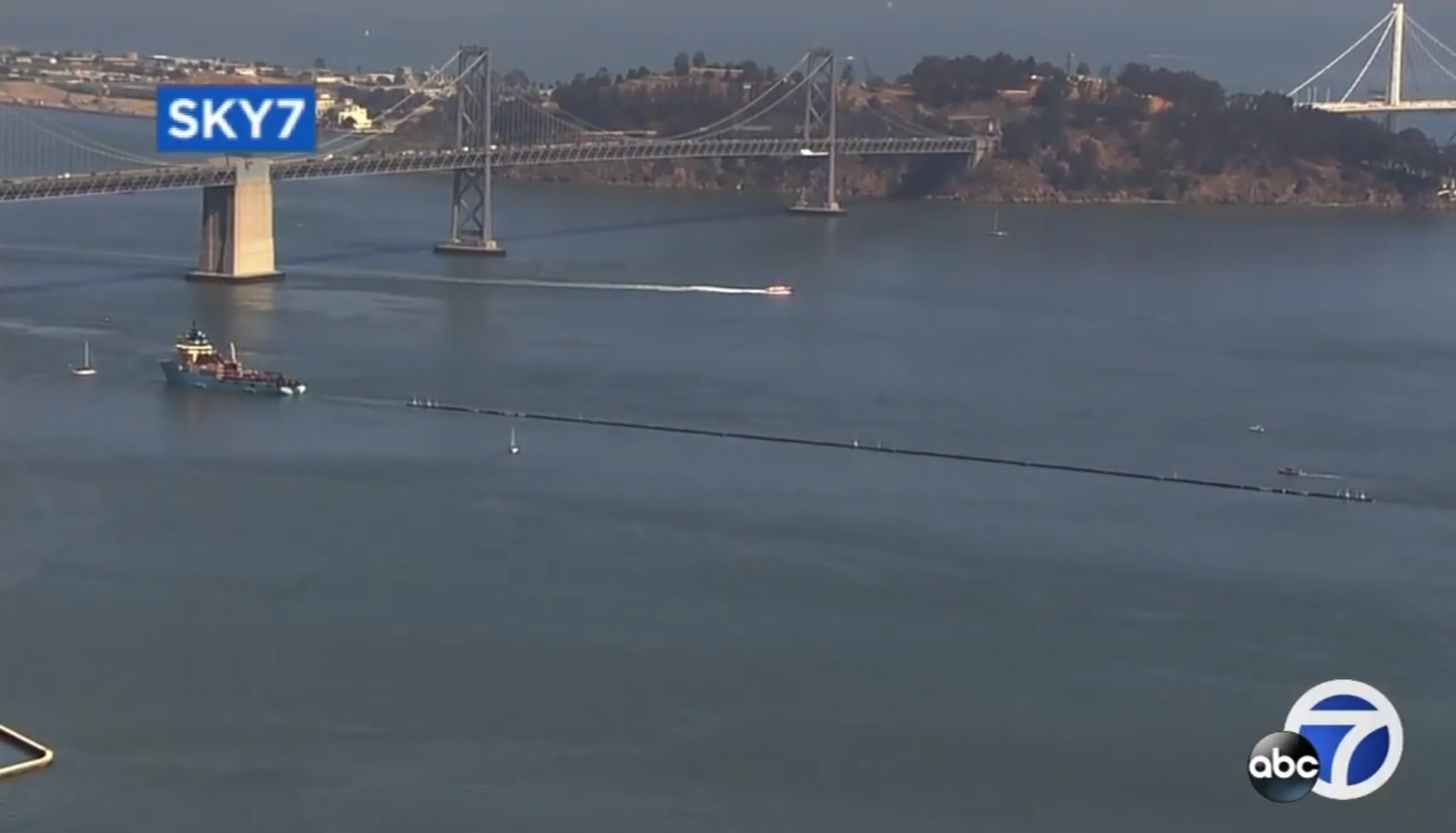

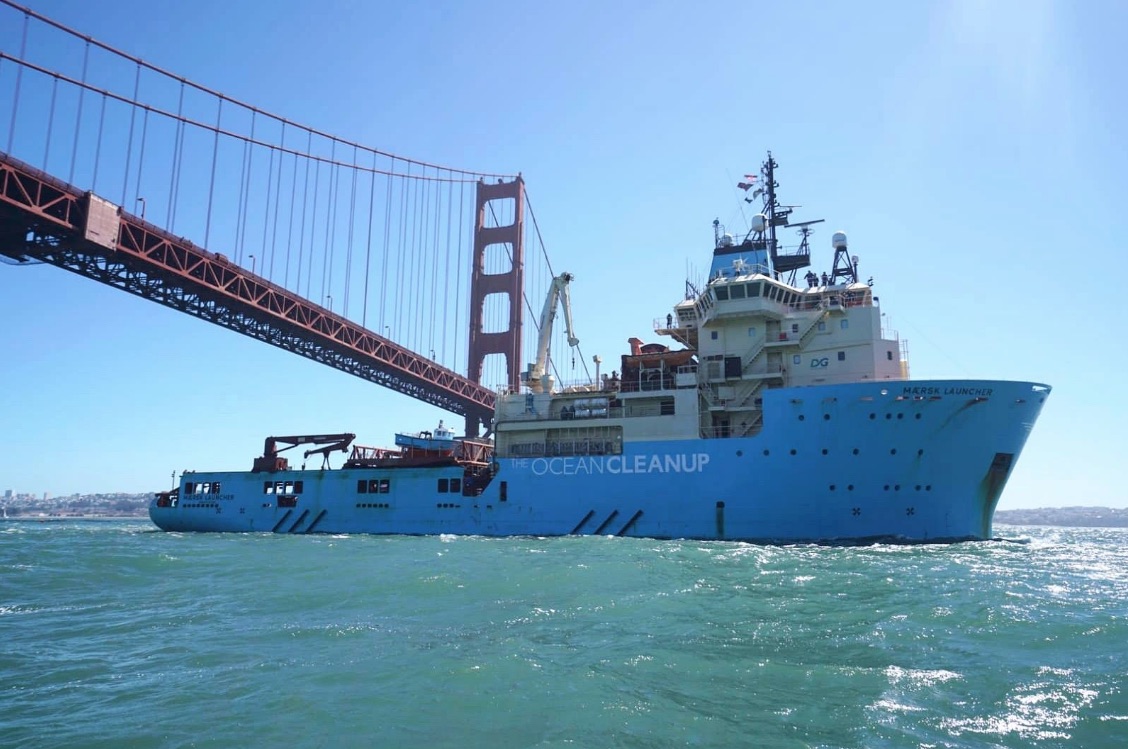
The first Ocean Cleanup vessel passed under San Francisco’s Golden Gate bridge on Saturday afternoon on its way to begin cleaning up the vast Pacific Ocean Garbage Patch of floating plastic.

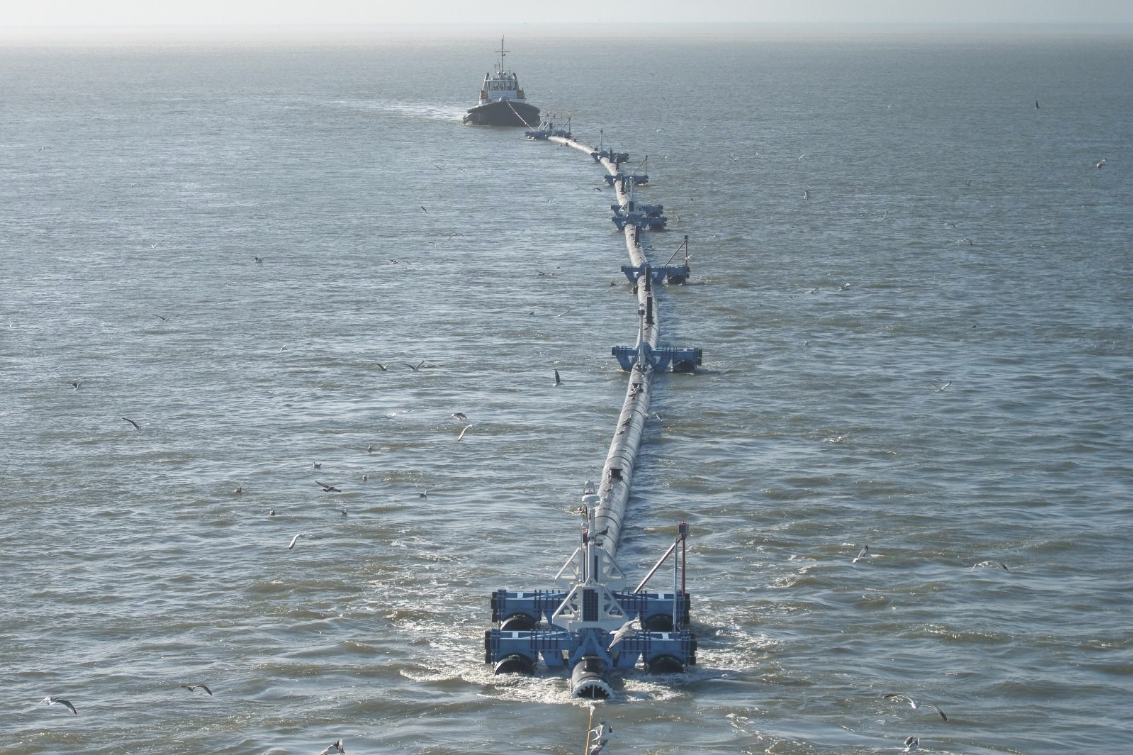
The idea first mooted four years ago by then Dutch teenager Boyan Slats, is to create an artificial “shoreline” with a large floating 600m (2,000ft) boom under which hangs a 3m (10ft) skirt into which the plastic will drift. The boom will drift about a knot slower than the ocean currents meaning that it will form a natural U-shape and that plastic will be initially collected without the use of any power. A cleanup vessel will periodically pick up the garbage and transfer it back to land for re-cycling. Fish and other wildlife should be able to swim clear from under the boom’s skirt say the makers.
If the system can be proved to work in the real world then a total of 60 vessels will be deployed with an estimated cleanup of 8,000 tonnes of plastic per year. It’s a monumental task and the company estimates that it will take until 2040 before the Pacific’s gyre of floating plastic waste is finally cleaned up. The system is not without its detractors and has received criticism as it could potentially harm wildlife like turtles who could get caught in the concentrated plastic within the boom. But there are onboard cameras in several places and a noise will be created to scare away fish before collection takes place. Other commentators have opined that it would be better to stop throwing plastic into the sea in the first place – but that argument does not address the massive amount of plastic that has already gathered in the gyre, taken there by the ocean currents that circle the Pacific.
Ocean Cleanup is based in Rotterdam in the Netherlands and has the backing of the Dutch Government and private investors. With an £18m budget so far – it will sell the plastic it collects.
“We feel we’re in a great hurry,” the BBC reported Lonneke Holierhoek, the project’s chief operating officer saying. “If we don’t do it, all this plastic will start breaking down into smaller and smaller pieces – and the smaller the pieces are, the more harmful and the harder to extract from the marine environment.”
An engineer with two decades of experience working on offshore projects, she’s not just a campaigner but someone with a wealth of experience working with huge structures out at sea. “Rather than talking about it or contributing to problems or protesting against it, it’s actually trying to solve it,” she says.
It should take three weeks for the first boom to be towed out to the Great Garbage Patch some 2,000km (1,200 miles) off the coast of California. Just how well it’s performing will become clear later this year. theoceancleanup.com
Below is a live video of the project leaving San Francisco