
HMS Terror is found at last! Franklin’s expedition ship – to find the Northwest Passage, which his crew abandoned in 1848 to try to reach safety after she became icebound in September 1846, has been located on the seabed 164 years after her loss.
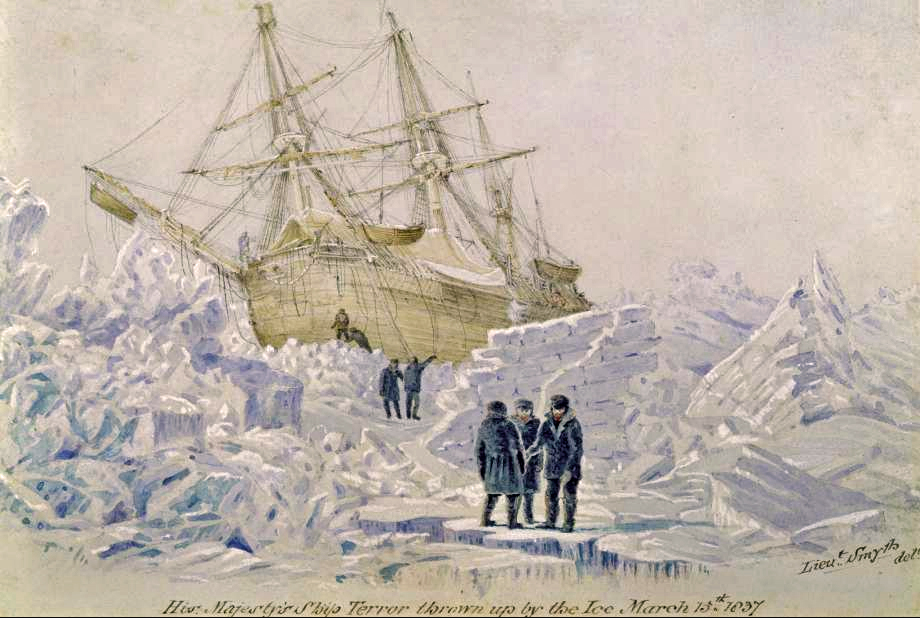
This painting (by Lt Wm Smyth) is of an earlier arctic expedition, where she also became ice-bound.
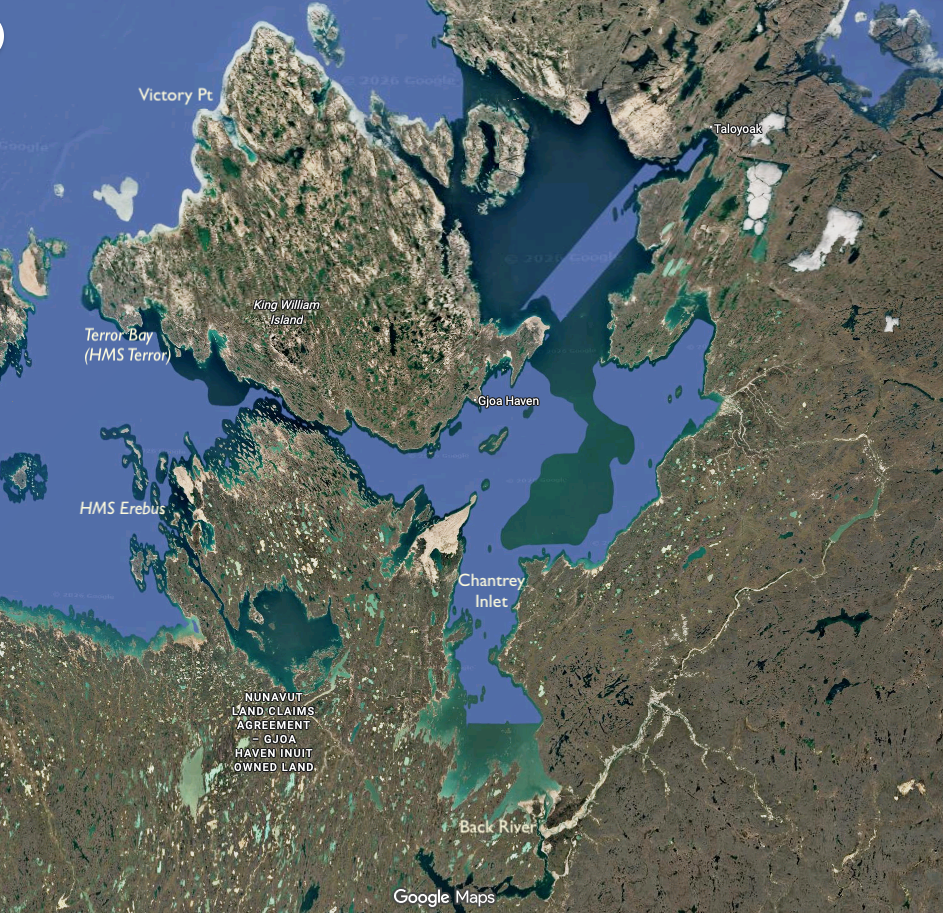
HMS Terror was found on September 3rd, two years after the discovery of HMS Erebus – the second ship in that ill fated expedition, also icebound and abandoned by her crew. The Erebus was discovered in September 2014 after several years of painstaking hydrographic hunting by teams including members of the Canadian Coast Guard, the Canadian Ice Service, the Canadian Navy, the Government of Nanavut and Parks Canada, not to forget local Inuit stories (which were ignored at the time). Her position is approximately 45 miles to the south of the Terror, which has appropriately been found in Terror Bay on the south west corner of King William Island in the Canadian Arctic Archipelago’s Nunavut area. The bay was named in 1910 by officials wishing to commemorate the loss of Captain Sir John Franklin and his men. Terror was found, intact, by teams of the Canadian Charity The Arctic Research Foundation.
Quite why the ships had become ice-locked so far apart is a mystery. All 129 crew – 69 of the Erebus and 61 of the Terror, perished including Sir John, who had died in June 1847, aboard HMS Erebus (his body’s location is unknown). 24 other officers and crew had also died before the decision was taken to abandon the vessels with the 105 survivors.
This was done under the leadership of Captain James Fitzjames (HMS Erebus) and Captain Francis Crozier who left a famous note in a cairn at Victory Point on the NW coast of King Wm Island describing what had happened and that they were now taking the crew and “walking” south to try to reach the Back River, at the south of Chantrey Inlet around 200km to the south east.
Sadly no-one made it and it seems that the survivors were forced to resort to cannibalism, of dead shipmates, to survive. The note was found 11 years later, during one of several searches for the missing men and their ships and their crew. This, 1857-1859 search, was one of seven funded by Lady Jane Franklin – Sir John’s tenaciously investigative widow. Never giving up hope she even funded the short-lived Pandora expedition which sailed north in June 1875. She died, aged 83, in July before they returned, empty handed again, in October.
Map of the area of Northern Canada where the ships were found